A Picture is Worth a Thousand Bullet Points
Over the past year, working heavily in the tech and medical sectors, I've seen firsthand how valuable it is to translate dense material into pictures for the people in the room.
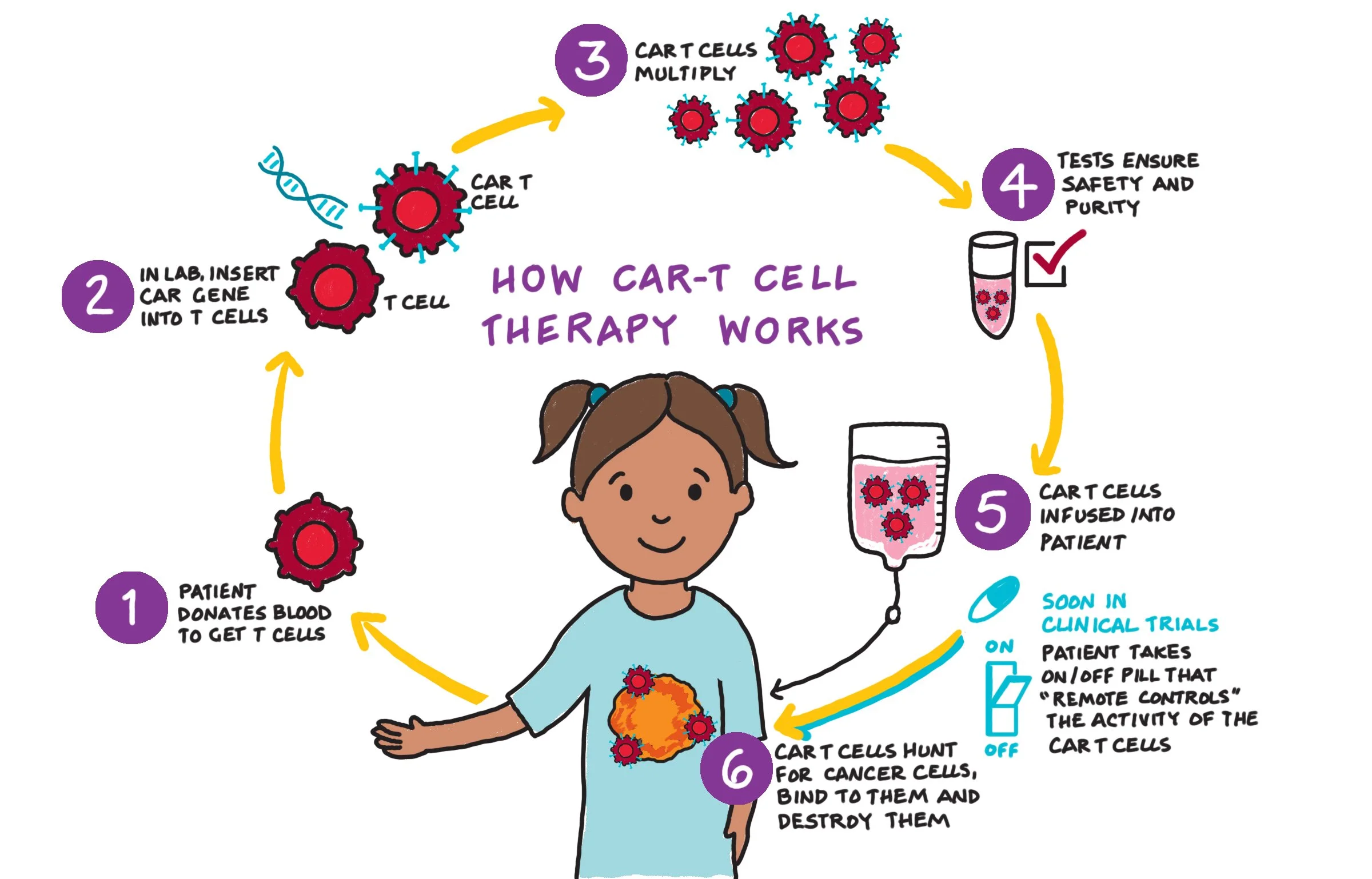
Infographic created by Alece Birnbach for Lucile Packard Children’s Hospital
Humans are visually wired. When it comes to retaining information, hearing yields about 10% retention, reading about 20%, and seeing a striking 80%.
That's why showing a slide that's all text is better than no visual at all; people want something to look at and make sense of. I often see folks squinting at those slides in meetings where large amounts of data are being communicated. Meanwhile, I'm at the back of the room translating everything I'm hearing into concise chunks of information, each one anchored by a simple drawing. When break time comes and people turn around, the relief at seeing all that content simplified and laid out in a way they can quickly grasp, is palpable.
And now they have a ready-made tool to use when communicating that same information to their teams.
The same goes for infographics, like the one pictured above. Explaining how CAR-T cell therapy works isn't nearly as easy as showing it in a simple graphic. Hand-drawn infographics are my favorites because they humanize information in a way that PowerPoint graphics simply can't.